LPA2 Receptor Antibodies
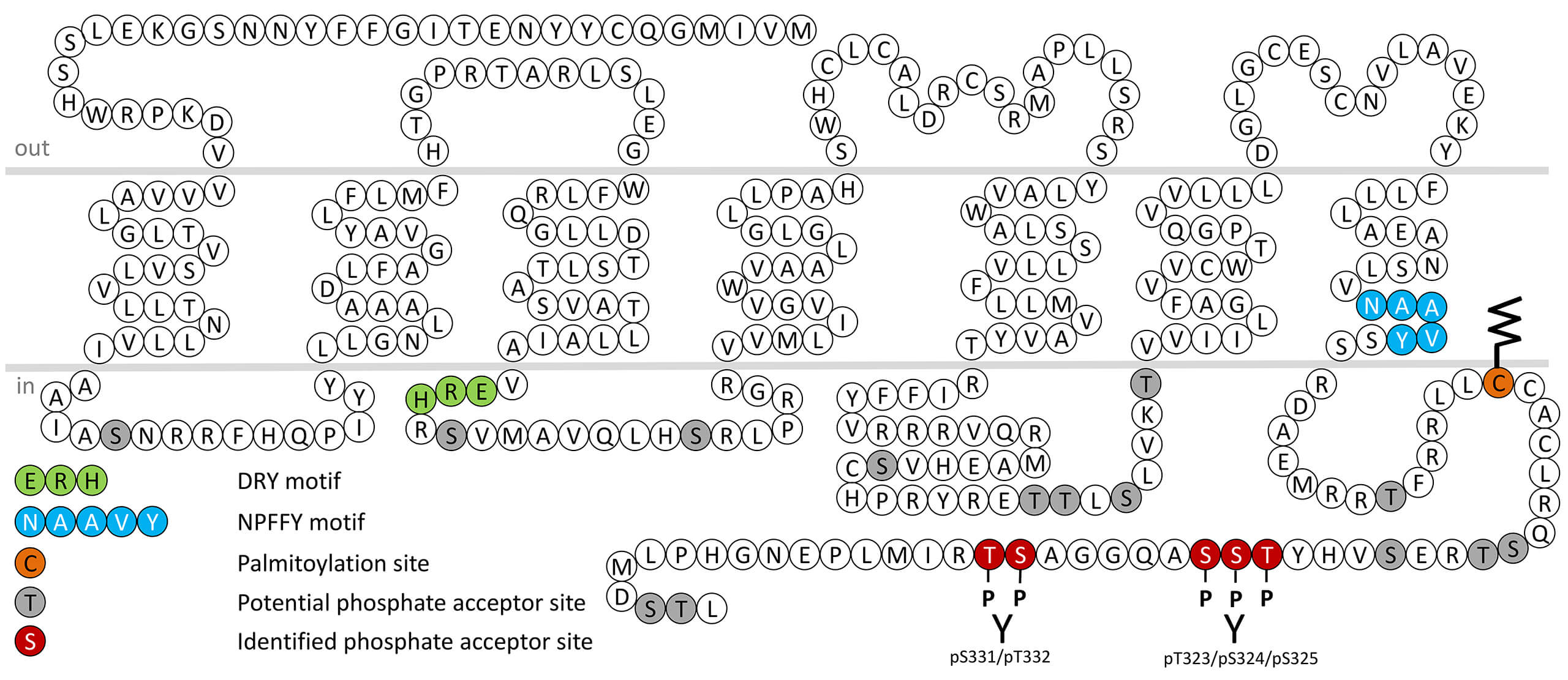 The lysophosphatidic acid receptor 2 (LPA₂), encoded by the LPAR2 gene, is a class A G protein–coupled receptor (GPCR) that binds the bioactive lipid lysophosphatidic acid (LPA). LPA₂ couples primarily to Gi/o, Gq/11, and G12/13 proteins, activating downstream signaling pathways including RhoA, PLC, MAPK/ERK, and PI3K/Akt, which regulate cell proliferation, migration, survival, and cytoskeletal organization. LPA₂ is widely expressed in epithelial tissues, immune cells, fibroblasts, and the nervous system, with notable roles in intestinal epithelium, lung, and reproductive organs. Functionally, LPA₂ is implicated in tissue repair, wound healing, and epithelial barrier maintenance, and also modulates immune cell trafficking and inflammatory responses. In disease contexts, LPA₂ signaling contributes to fibrosis, cancer progression, and inflammatory disorders, where it can enhance cell survival, proliferation, and motility. Pharmacologically, selective LPA₂ agonists and antagonists have been explored in preclinical models to modulate fibrotic and inflammatory responses, although clinical translation remains limited. LPA₂ can also interact with PDZ domain-containing proteins, adding specificity to its signaling and subcellular localization. Overall, LPA₂ functions as a critical lipid-sensing receptor that coordinates cellular responses to stress, injury, and inflammation, and represents a potential therapeutic target in fibrotic, inflammatory, and neoplastic diseases. For more information on LPA2 pharmacology please refer to the IUPHAR database. For further reading refer to:
Chun J, Hla T, Lynch KR, Spiegel S, Moolenaar WH. International Union of Basic and Clinical Pharmacology. LXXVIII. Lysophospholipid receptor nomenclature. Pharmacol Rev. 2010 Dec;62(4):579-87. doi: 10.1124/pr.110.003111. PMID: 21079037; PMCID: PMC2993255.
Kihara Y, Maceyka M, Spiegel S, Chun J. Lysophospholipid receptor nomenclature review: IUPHAR Review 8. Br J Pharmacol. 2014 Aug;171(15):3575-94. doi: 10.1111/bph.12678. Epub 2014 Jul 12. PMID: 24602016; PMCID: PMC4128058.
Blaho V, Chun J, Herr D, Jones D, Jonnalagadda D, Kihara Y. Lysophospholipid (S1P) receptors in GtoPdb v.2023.1. IUPHAR/BPS Guide to Pharmacology CITE. 2023; 2023(1).


 pS331/pT332-LPA2 (phospho-Lysophosphatidic Acid...
  pT323/pS324/pS325-LPA2...