Premium Phosphosite-Specific 7TM Antibodies
Your Resource for GPCR Research
Select Your Country of Delivery below

Sphingosine 1-Phosphate Receptor 3 Antibodies
Close filters
No results were found for the filter!
NEW
Agonist-induced Serine335/Serine337 phosphorylation of the Sphingosine 1-Phosphate Receptor 3
pS335/pS337-S1P3 (phospho-Sphingosine...
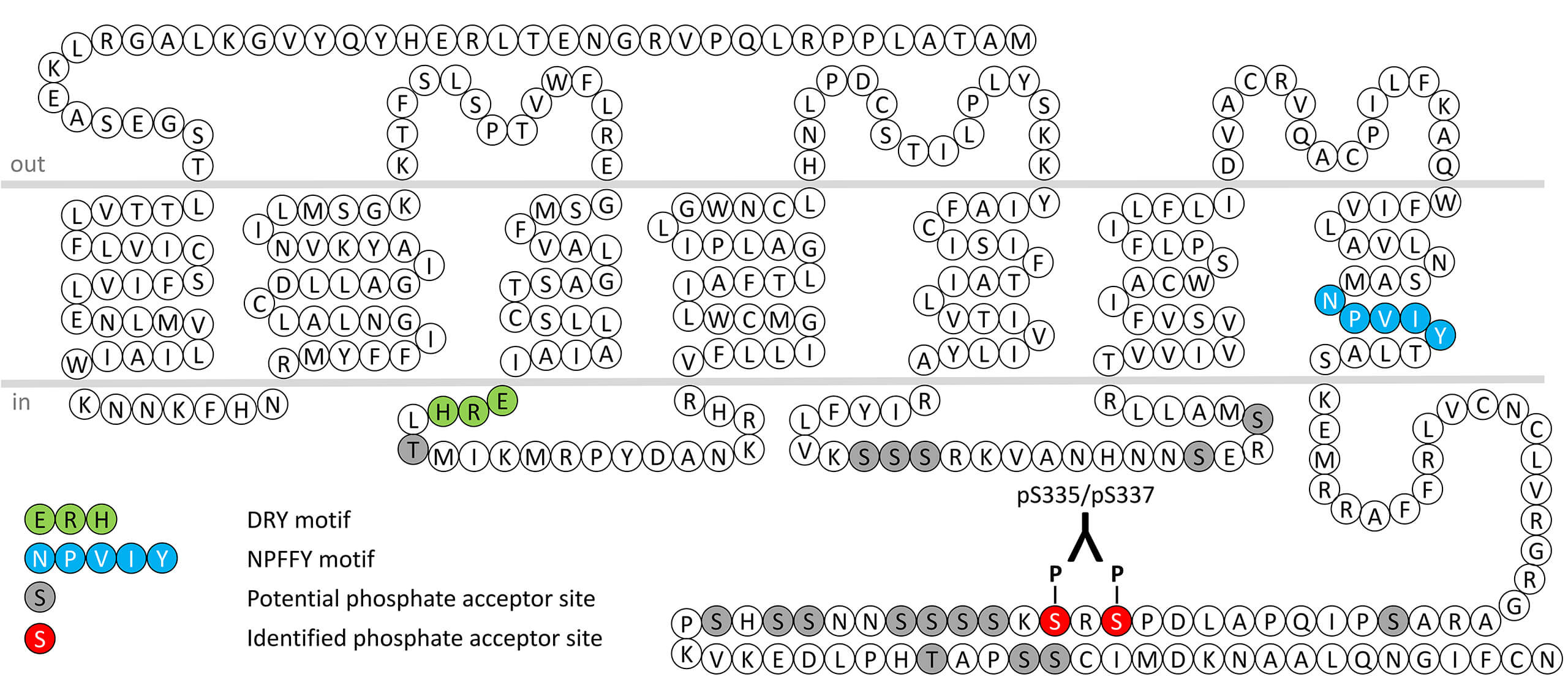
Serine335/Serine337 (S335/S337) is major phosphorylation site of the Sphingosine 1-Phosphate Receptor 3 (S1P3). The pS335/pS337-S1P3 antibody detects phosphorylation in response to agonists. S335/S337 phosphorylation is likely to be...
$ 400.00 *
NEW
Validation of the Sphingosine 1-Phosphate Receptor 3 in transfected HEK293 cells.
S1P3 (non-phospho), Sphingosine 1-Phosphate...
The non-phospho-sphingosin 1-phosphate receptor 3 antibody is directed against the distal end of the carboxyl-terminal tail of human S1P3.
$ 400.00 *

The sphingosine-1-phosphate receptor 3 (S1P3 receptor) is a G protein-coupled receptor (GPCR) that mediates the biological effects of sphingosine-1-phosphate (S1P), a bioactive lipid involved in vascular regulation, immune function, and tissue remodeling. S1P3 receptor expression is regulated by inflammatory stimuli, growth factors, and environmental stress signals and is found in endothelial cells, smooth muscle cells, cardiomyocytes, macrophages, and various epithelial tissues. Upon activation, the receptor couples to Gi, Gq, and G12/13 proteins, triggering downstream pathways including phospholipase C activation, calcium mobilization, MAPK signaling, and Rho-mediated cytoskeletal remodeling. S1P3 signaling plays important roles in vasodilation, vascular permeability, leukocyte recruitment, and cardiac physiology. Dysregulated receptor activity has been associated with cardiovascular disease, fibrosis, cancer progression, and chronic inflammatory disorders. Receptor function is further controlled through ligand availability, receptor internalization, and desensitization mechanisms following prolonged stimulation. Although selective experimental antagonists such as TY-52156 have been developed for research purposes, no S1P3-specific drugs have yet been approved for clinical use, while several non-selective S1P receptor modulators indirectly affect S1P3 signaling. S1P3 has also been implicated in the generation of pain and itch. S1P3 receptor desensitization, β-arrestin recruitment and internalization are regulated by phosphorylation of carboxyl-terminal serine335/serine337 (pS335/pS337-S1P3). This nomenclature refers to the human S1P3 receptor. This phosphorylation motif is highly conserved across species and is identical mice, rats and humans. For more information on S1P3 pharmacology please refer to the IUPHAR database. For further reading refer to:

Chun J, Hla T, Lynch KR, Spiegel S, Moolenaar WH. International Union of Basic and Clinical Pharmacology. LXXVIII. Lysophospholipid receptor nomenclature. Pharmacol Rev. 2010 Dec;62(4):579-87. doi: 10.1124/pr.110.003111. PMID: 21079037; PMCID: PMC2993255.

Kihara Y, Maceyka M, Spiegel S, Chun J. Lysophospholipid receptor nomenclature review: IUPHAR Review 8. Br J Pharmacol. 2014 Aug;171(15):3575-94. doi: 10.1111/bph.12678. Epub 2014 Jul 12. PMID: 24602016; PMCID: PMC4128058.

Blaho V, Chun J, Herr D, Jones D, Jonnalagadda D, Kihara Y. Lysophospholipid (S1P) receptors in GtoPdb v.2023.1. IUPHAR/BPS Guide to Pharmacology CITE. 2023; 2023(1).

The sphingosine-1-phosphate receptor 3 (S1P3 receptor) is a G protein-coupled receptor (GPCR) that mediates the biological effects of sphingosine-1-phosphate (S1P), a bioactive lipid involved... read more »
Close window
Sphingosine 1-Phosphate Receptor 3 Antibodies

The sphingosine-1-phosphate receptor 3 (S1P3 receptor) is a G protein-coupled receptor (GPCR) that mediates the biological effects of sphingosine-1-phosphate (S1P), a bioactive lipid involved in vascular regulation, immune function, and tissue remodeling. S1P3 receptor expression is regulated by inflammatory stimuli, growth factors, and environmental stress signals and is found in endothelial cells, smooth muscle cells, cardiomyocytes, macrophages, and various epithelial tissues. Upon activation, the receptor couples to Gi, Gq, and G12/13 proteins, triggering downstream pathways including phospholipase C activation, calcium mobilization, MAPK signaling, and Rho-mediated cytoskeletal remodeling. S1P3 signaling plays important roles in vasodilation, vascular permeability, leukocyte recruitment, and cardiac physiology. Dysregulated receptor activity has been associated with cardiovascular disease, fibrosis, cancer progression, and chronic inflammatory disorders. Receptor function is further controlled through ligand availability, receptor internalization, and desensitization mechanisms following prolonged stimulation. Although selective experimental antagonists such as TY-52156 have been developed for research purposes, no S1P3-specific drugs have yet been approved for clinical use, while several non-selective S1P receptor modulators indirectly affect S1P3 signaling. S1P3 has also been implicated in the generation of pain and itch. S1P3 receptor desensitization, β-arrestin recruitment and internalization are regulated by phosphorylation of carboxyl-terminal serine335/serine337 (pS335/pS337-S1P3). This nomenclature refers to the human S1P3 receptor. This phosphorylation motif is highly conserved across species and is identical mice, rats and humans. For more information on S1P3 pharmacology please refer to the IUPHAR database. For further reading refer to:

Chun J, Hla T, Lynch KR, Spiegel S, Moolenaar WH. International Union of Basic and Clinical Pharmacology. LXXVIII. Lysophospholipid receptor nomenclature. Pharmacol Rev. 2010 Dec;62(4):579-87. doi: 10.1124/pr.110.003111. PMID: 21079037; PMCID: PMC2993255.

Kihara Y, Maceyka M, Spiegel S, Chun J. Lysophospholipid receptor nomenclature review: IUPHAR Review 8. Br J Pharmacol. 2014 Aug;171(15):3575-94. doi: 10.1111/bph.12678. Epub 2014 Jul 12. PMID: 24602016; PMCID: PMC4128058.

Blaho V, Chun J, Herr D, Jones D, Jonnalagadda D, Kihara Y. Lysophospholipid (S1P) receptors in GtoPdb v.2023.1. IUPHAR/BPS Guide to Pharmacology CITE. 2023; 2023(1).

Recently viewed