LPA6 Receptor Antibodies
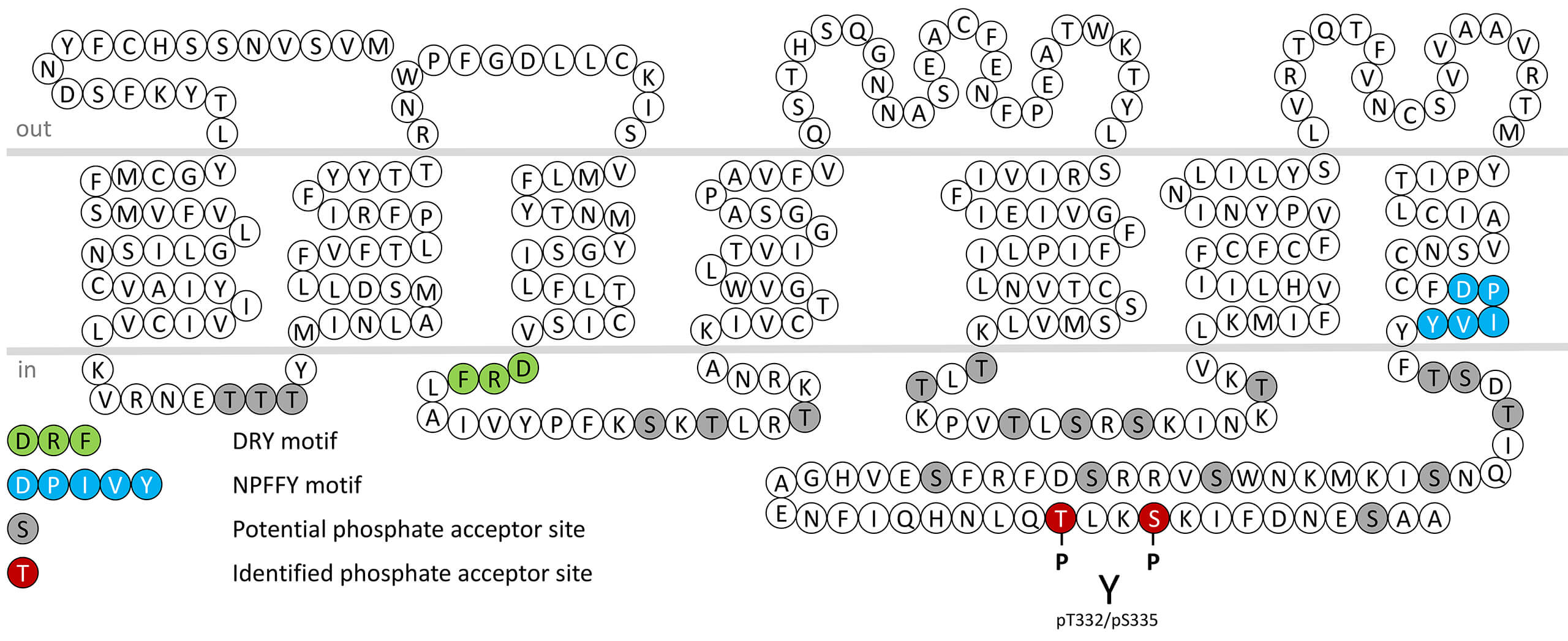 The lysophosphatidic acid receptor 6 (LPA₆), encoded by the LPAR6 gene, is a class A G protein–coupled receptor (GPCR) that binds the bioactive lipid lysophosphatidic acid (LPA), exhibiting unique signaling properties compared with other LPA receptors. LPA₆ primarily couples to G12/13 proteins, leading to activation of RhoA and downstream cytoskeletal remodeling, which influences cell shape, adhesion, and motility. It is expressed in a variety of tissues, with notable levels in hair follicles, skin, vascular endothelium, and certain immune cells, highlighting roles in both development and tissue homeostasis. Functionally, LPA₆ has been strongly implicated in hair growth regulation, with mutations in LPAR6 linked to congenital hair disorders, and it also contributes to vascular development, endothelial cell function, and tissue remodeling. In addition, LPA₆ may participate in immune cell migration and other processes related to cellular organization and barrier integrity. Pharmacologically, selective ligands for LPA₆ remain limited, and much of its functional characterization relies on genetic models and LPA analogs. Compared with other LPA receptors, LPA₆ tends to mediate more structural and morphogenic effects rather than proliferative signals, reflecting its specialized role in developmental and tissue-specific processes. Overall, LPA₆ is a lipid-sensing receptor that integrates Rho-mediated cytoskeletal signaling to regulate hair growth, tissue architecture, and cellular motility, representing a distinct target for hair disorders and vascular biology research. For more information on LPA6 pharmacology please refer to the IUPHAR database. For further reading refer to:
Chun J, Hla T, Lynch KR, Spiegel S, Moolenaar WH. International Union of Basic and Clinical Pharmacology. LXXVIII. Lysophospholipid receptor nomenclature. Pharmacol Rev. 2010 Dec;62(4):579-87. doi: 10.1124/pr.110.003111. PMID: 21079037; PMCID: PMC2993255.
Kihara Y, Maceyka M, Spiegel S, Chun J. Lysophospholipid receptor nomenclature review: IUPHAR Review 8. Br J Pharmacol. 2014 Aug;171(15):3575-94. doi: 10.1111/bph.12678. Epub 2014 Jul 12. PMID: 24602016; PMCID: PMC4128058.
Blaho V, Chun J, Herr D, Jones D, Jonnalagadda D, Kihara Y. Lysophospholipid (S1P) receptors in GtoPdb v.2023.1. IUPHAR/BPS Guide to Pharmacology CITE. 2023; 2023(1).

 pT332/pS335-LPA6 (phospho-Lysophosphatidic Acid...
  LPA6 (non-phospho), Lysophosphatidic Acid...